

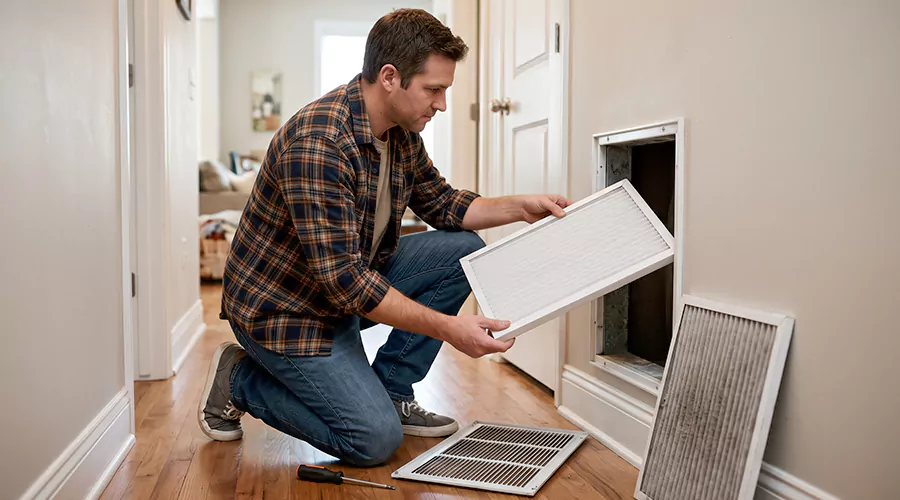
To increase airflow from HVAC vents, start by opening blocked registers, replacing dirty air filters, clearing return grilles, and checking for crushed or disconnected ductwork. If airflow remains weak, an HVAC technician may need to inspect the blower, evaporator coil, duct sizing, balancing dampers, and system static pressure.
Weak airflow can make rooms uncomfortable even when the heating or air conditioning equipment appears to be operating normally. Some rooms may receive very little conditioned air, while others feel excessively warm or cold. Air duct camera inspection can help identify internal blockages, damaged duct sections, and debris that may be restricting airflow through the ventilation system.
Central HVAC systems depend on a connected network of supply and return ducts. Restrictions anywhere along this pathway can affect how much air reaches the registers. The correct solution depends on whether the problem affects one room, several outlets, or the entire house. Understanding these differences helps homeowners avoid unnecessary repairs and potentially harmful adjustments.
What Causes Weak Airflow From HVAC Vents?
Airflow can decrease when the blower encounters excessive resistance or conditioned air escapes before reaching the intended room. The U.S. Department of Energy identifies dirty filters, leaking or restricted ductwork, and clogged cooling coils as common causes of limited cooling airflow.
| Possible Cause | Typical Symptom | Recommended Solution |
|---|---|---|
| Dirty HVAC filter | Multiple vents feel weak | Replace filter |
| Closed register | Low airflow at one outlet | Open register |
| Blocked return grille | Weak overall circulation | Remove obstruction |
| Crushed flexible duct | Weak airflow in one room | Repair duct |
| Disconnected duct | Little air from affected branch | Reconnect and seal |
| Duct leakage | Low airflow in distant rooms | Seal and repair joints |
| Incorrect damper setting | Uneven airflow distribution | Balance system |
| Dirty evaporator coil | Reduced cooling airflow | Professional inspection |
| Undersized ducts | Persistent airflow restriction | Evaluate duct design |
| Blower malfunction | Widespread airflow problem | Arrange equipment repair |
A technician should identify the cause before recommending significant changes to the duct network.
1. Open Supply Registers Completely
Start by checking the supply outlets in rooms where airflow seems weak. Adjustable register louvers can become closed accidentally. Furniture, rugs, curtains, and stored items may also obstruct the opening.
Open the register and move nearby objects. Compare the affected outlet with other registers while the blower is running normally. If the register remains weak despite being unobstructed, the restriction may be farther inside the duct.
2. Replace a Dirty HVAC Air Filter
A loaded filter increases resistance as air moves toward the furnace or air handler. The Department of Energy explains that clogged filters can dramatically reduce airflow and increase energy consumption.
Inspect the filter regularly and replace or clean it according to the manufacturer's maintenance instructions. Use the correct size and a filtration rating compatible with the equipment. Do not remove the filter permanently or assume that switching to a less efficient filter is the correct solution. A technician can evaluate filter pressure drop when compatibility is uncertain.
3. Keep Return Air Vents Clear
Return grilles allow indoor air to travel back to the HVAC equipment. When furniture or other objects block these openings, overall circulation can suffer.
Inspect large hallway returns and any returns located inside bedrooms or other rooms. Keep the grilles unobstructed and avoid covering them to reduce noise. The DOE recommends adequate return-air pathways so conditioned air can circulate through the house.
4. Check for Crushed Flexible Ducts
Flexible ductwork is frequently installed in attics, basements, and crawlspaces. A duct may become kinked, compressed, or sag excessively because of improper support or stored objects.
These problems increase airflow resistance, reducing delivery to the connected register. Inspect only safely accessible sections. A severely compressed or damaged duct may require replacement rather than being pulled back into shape.
5. Repair Leaking or Disconnected Ductwork
Air escaping from supply duct joints never reaches the intended room. ENERGY STAR reports that typical residential duct systems may lose approximately 20% to 30% of moving air through leaks, holes, and poor connections. Large leaks are particularly concerning when ducts pass through attics or crawlspaces.
Qualified contractors can locate defects and repair connections using suitable mechanical fastening and approved HVAC sealing materials. Energy star recommends mastic or appropriate metal tape rather than ordinary cloth-backed duct tape.
6. Evaluate Balancing Damper Settings
Some duct systems include manual balancing dampers that regulate airflow through individual branches. A partially closed damper may explain why one room receives little air while neighboring rooms have stronger supply. However, opening every damper without understanding the design can create a different imbalance.
A technician should measure room airflow and make appropriate adjustments. Balancing is most effective after major duct leaks and restrictions have been corrected.
7. Inspect the Evaporator Coil
The evaporator coil is part of a central air conditioning system's cooling equipment. Dust and debris on the coil can restrict the airflow passing through it. Inadequate airflow may also contribute to coil freezing, which creates additional blockage.
If the system has weak airflow together with ice, water leakage, or poor cooling, stop cooling operation and arrange professional inspection. Coil cleaning and refrigeration system diagnosis should be performed using appropriate equipment procedures.
8. Check for Restricted Return-Air Pathways
A bedroom may receive supply air but lack an adequate pathway back to the central return. When the bedroom door closes, pressure can build up inside the room and interfere with normal circulation. DOE Building America guidance describes dedicated return ducts, transfer grilles, and jump ducts as possible solutions.
An HVAC contractor can measure room pressure with doors closed and determine whether a return modification is needed. Do not cut openings into walls or doors without checking building requirements.
9. Determine Whether the Ducts Are Undersized
Some airflow problems originate in the duct design rather than poor maintenance. An undersized branch may not carry enough air to meet the connected room's requirements. Long duct runs, restrictive elbows, and insufficient return capacity can worsen the problem.
ACCA Manual D provides recognized methods for residential duct design. A contractor may need to evaluate duct dimensions, blower performance, static pressure, and room airflow before recommending larger ducts.
10. Have the Blower and Static Pressure Checked
The HVAC blower provides the force required to move air through the distribution network. Electrical, mechanical, or control problems can affect its operation. High system static pressure may also indicate excessive resistance within filters, coils, or ductwork.
A technician can measure total external static pressure and compare it with the manufacturer's specifications. Do not change blower speed settings without professional evaluation. Incorrect adjustments can affect cooling, heating, and equipment reliability.
How to Increase HVAC Airflow Step by Step?
Begin with simple checks before arranging major repairs.
- Identify whether one room or the entire house has weak airflow.
- Open the affected supply registers.
- Remove furniture and rugs blocking vents.
- Inspect and replace a dirty air filter.
- Clear return-air grilles.
- Check whether closed bedroom doors affect circulation.
- Look for visible damage in safely accessible ducts.
- Request airflow and static pressure measurements if the problem remains.
- Repair leaks, restrictions, or equipment defects identified during testing.
- Verify the airflow again after repairs.
These steps help distinguish routine maintenance problems from duct design issues.
Will Air Duct Cleaning Increase Airflow?
Air duct cleaning may improve airflow when substantial debris physically obstructs the duct or HVAC components. However, ordinary surface dust usually does not create a significant blockage.
The Environmental Protection Agency does not recommend routine residential duct cleaning without a specific reason. Professional home ventilation cleaning may be appropriate when inspections reveal significant dust buildup, visible mold growth, or debris restricting airflow within the ventilation system.
A crushed branch, disconnected duct, or undersized return requires repair rather than cleaning. Ask the contractor to demonstrate the obstruction before recommending duct cleaning solely to increase airflow.
Can Ceiling Fans Improve HVAC Airflow?
Ceiling fans circulate air within a room and can improve occupants' comfort. However, they do not increase the amount of conditioned air traveling through HVAC supply ducts. A fan may help make a warm room feel more comfortable, but it will not repair a restrictive duct or faulty blower. Use fans as a comfort measure rather than a substitute for correcting airflow problems.
When Should You Call an HVAC Technician?
Arrange professional service when multiple vents remain weak after replacing filters and clearing obstructions. Unusual blower noise, repeated equipment shutdowns, frozen coils, and persistent room temperature differences also deserve investigation. A technician can measure airflow, evaluate pressure losses, and determine whether the solution involves repair, balancing, or duct redesign.
Conclusion
Increasing airflow from HVAC vents starts with maintaining filters, opening registers, and keeping return pathways clear. Persistent problems may involve crushed ducts, air leakage, dirty cooling coils, inadequate duct sizing, or blower issues. Professional airflow and static pressure testing can identify restrictions before unnecessary changes are made. Correcting the source of poor airflow can improve room comfort while protecting equipment performance.